


 +1-204-846-HOPE
 info@secancersupport.ca
I’m a 40-year-old man who has spent approximately 16 years working as a long-haul truck driver. I’m 6’7″, built like a small refrigerator, and I’ve always considered myself someone who could handle just about anything life threw at me. And life has certainly tested that theory.
In 2024, I nearly died from necrotizing fasciitis and Fournier’s gangrene. I underwent three life-saving surgeries, spent 63 days in the hospital, and faced almost a year of recovery before I could return to work. I genuinely thought I’d already experienced the worst life had to offer.
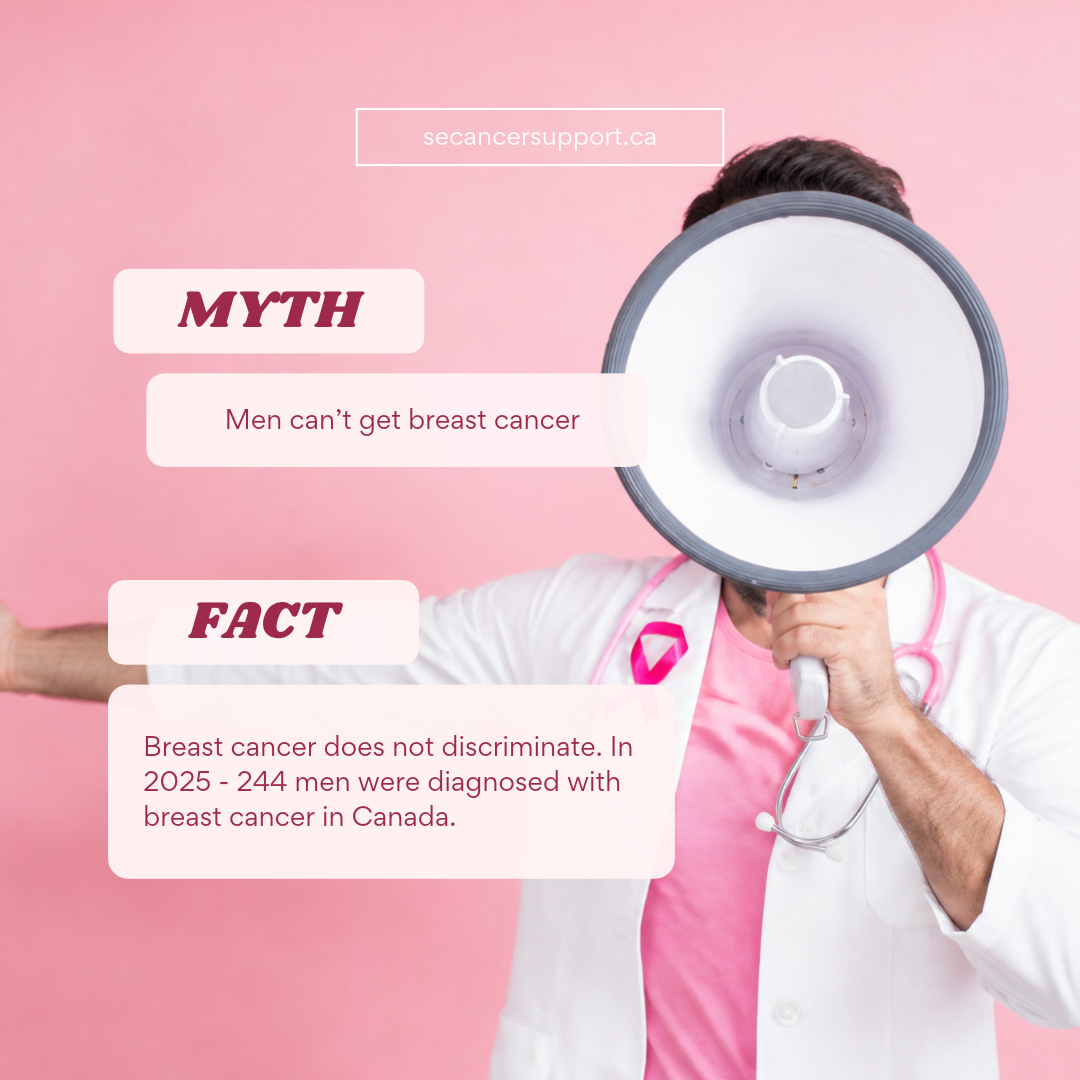
Then, in December 2025, I discovered a lump in my chest. And here’s something that might surprise you. I didn’t even know men could get breast cancer. Not a clue. So I didn’t immediately think cancer. I didn’t recognize the potential danger, and I didn’t understand why a lump in my chest should concern me.
Eventually, I had it examined. In April 2026, I was officially diagnosed with HER2-positive male breast cancer. Suddenly, the guy who thought he was practically indestructible was facing chemotherapy, surgery, ongoing treatments, and a future filled with uncertainty. And that brings me to your questions.
WHAT HAS BEEN THE MOST CHALLENGING PART OF MY JOURNEY?
Honestly, I cannot narrow it down to just one thing. There are three major challenges, and each has affected me in ways I never expected.
 The first is the physical side. Chemotherapy is something you can read about, but until you’ve experienced it, I don’t think you can fully appreciate what it does to a person. The exhaustion was unlike anything I’d ever experienced. There were days when sleeping for hours didn’t make me feel any less tired. Food tasted absolutely horrible. The nausea, the pain, the weakness, and the constant feeling that my body was no longer cooperating with me became my new normal.
And yet, the physical suffering wasn’t necessarily the hardest part. The second challenge was losing my independence. I’ve spent my adult life being self-sufficient. As a truck driver, I’m accustomed to solving problems, working independently, and taking care of myself. Cancer took much of that away. Suddenly, I couldn’t work. I couldn’t do many of the things I normally did. My entire life became organized around medical appointments, treatments, recovery days, and whatever energy I happened to have left. Since April, I’ve attended 41 medical appointments in just six months, and I’m still not finished. That doesn’t include all the days spent recovering or worrying about the next appointment.
But the third challenge is something I really wish more people talked about. The loneliness and psychological impact of cancer. People often imagine that when someone is diagnosed with cancer, friends and family automatically rally around them. Sometimes they do. But sometimes, cancer becomes one of the loneliest experiences of your entire life. You quickly discover the difference between people who say they’re there for you and people who actually show up. I’ve experienced situations where people offered to help, only to be unavailable when I genuinely needed them. I’ve spent days at home without a phone call or a visitor. I’ve had moments when I desperately needed help but ended up doing things myself, even when I physically shouldn’t have.
And perhaps the hardest part is realizing that life continues normally for everyone else while yours has essentially stopped. People go to work, make plans, take vacations, and complain about their everyday problems. Meanwhile, you’re sitting at home wondering what your next test result will say. Or whether the treatment is working. Or whether you’re going to have to endure another round of chemotherapy. You can be surrounded by doctors, nurses, and medical professionals during the day, then return home to complete silence. And that silence can be absolutely deafening.
The mental side has also been difficult in ways I never anticipated. After surgery, I discovered that I was struggling to look at myself in the mirror. Between the changes chemotherapy made to my appearance and the surgical scars across my chest, I sometimes have trouble recognizing the person looking back at me. I’ve spent much of this journey joking about everything and telling myself that I’m fine. But I’m beginning to realize that being able to endure something physically doesn’t automatically mean you’ve processed it emotionally. I’ve survived tremendous physical pain in my life. But this mental battle? Some days, it kicks my ass. And I think it’s important for people to know that this can happen, even to someone who considers himself exceptionally tough.
WHAT HAS BEEN THE MOST POSITIVE PART OF MY JOURNEY?
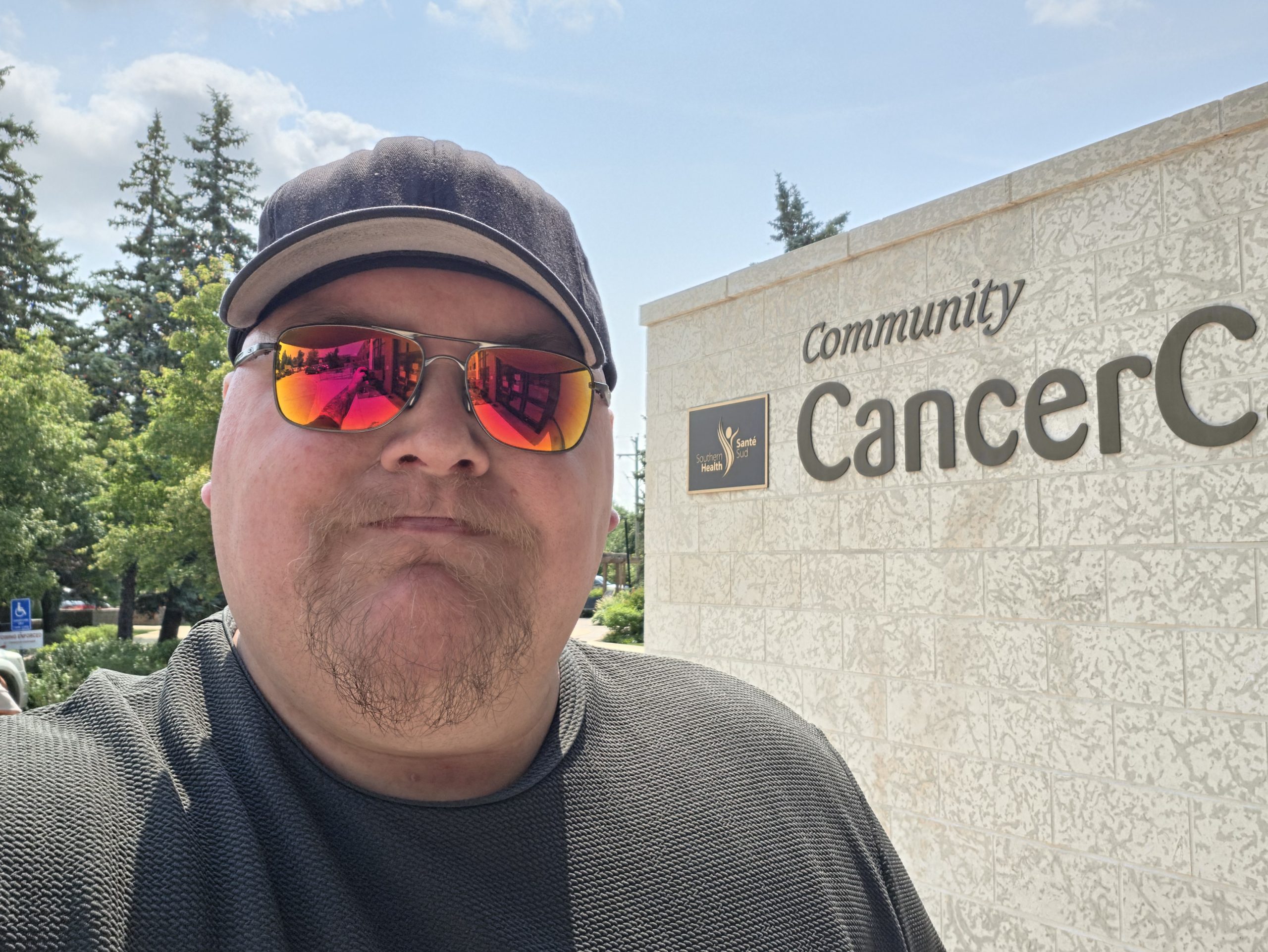 This one is actually quite easy to answer. Knowing that my story might help another man.
When I was diagnosed, one of the first things that struck me was how little awareness there seemed to be about male breast cancer. I was 40 years old and had absolutely no idea that I could develop it. And I started wondering how many other men were walking around with lumps or unusual changes in their chests, dismissing them because they believed breast cancer was exclusively a women’s disease. That thought bothered me tremendously. I run a social media page called BamBam the Trucker, where I’ve been documenting my cancer journey. And when I say documenting, I mean everything. The good, the bad, the ugly, the frightening, and occasionally the downright ridiculous. I’ve talked openly about chemotherapy, surgery, side effects, fear, loneliness, and the emotional struggles that come with all of it. I also use a considerable amount of sarcasm and dark humour because that’s simply how I’ve always dealt with difficult situations. But underneath the jokes is a very serious purpose.
I don’t want another man to ignore a warning sign simply because nobody ever told him that male breast cancer exists. I’m not trying to take awareness away from women. Women absolutely deserve the awareness, support, and recognition they’ve fought so hard to establish. I simply believe men deserve to be included in that conversation. We should be standing alongside women in the fight against breast cancer, not treating it as though the disease recognizes gender. And if sharing my story encourages even one man to examine himself, take a suspicious lump seriously, or make an appointment with his doctor, then something positive has come out of this nightmare.
I’ve also been fortunate to encounter some genuinely wonderful people throughout my treatment, including medical professionals who have gone above and beyond. Those acts of kindness matter more than people sometimes realize. But knowing that my experience could potentially help save someone else’s life? That’s what keeps me talking.
WHAT WOULD I SAY TO ENCOURAGE OTHER MEN IN MY SITUATION?
First and foremost….
Breast cancer does not make you any less of a man.
Read that again.
Having breast cancer doesn’t change your masculinity. Having surgery on your chest doesn’t change it. Losing your hair, needing assistance, being frightened, or struggling emotionally doesn’t change it either. I think men are often conditioned to believe that we’re supposed to be tough, independent, and capable of handling everything ourselves. We’re supposed to suck it up, push through, and never let anyone see us struggle. Well, I’m here to tell you something. Cancer doesn’t care how tough you think you are. It doesn’t care how big you are, what you do for a living, or how many difficult situations you’ve survived.And there’s absolutely nothing shameful about admitting that you’re scared. You can be terrified of your next appointment. You can cry. You can have days when you don’t want to get out of bed. You can hate every second of treatment. None of that means you’re weak. It means you’re human.
I’d also encourage men to take their health seriously. If you discover a lump in your chest, changes around your nipple, unusual discharge, or anything that doesn’t seem right, get it checked. Don’t ignore it because you’re embarrassed. Don’t dismiss it because you’re a man. And please don’t assume that something cannot happen to you simply because you’ve never heard of it happening to someone like you. I made that mistake. I don’t want somebody else to repeat it.
I’d also tell men to be prepared for the possibility that their support system might not look the way they expected. Some people will surprise you with incredible kindness. Others may disappear when things become difficult. And if you find yourself struggling with loneliness, anxiety, or the emotional aftermath of treatment, please talk to someone. You shouldn’t have to navigate that part alone.
Finally, I’d remind them that cancer treatment isn’t always a straight line. There are setbacks, unexpected decisions, frightening appointments, and moments when you feel like you’re finally making progress, only to discover another obstacle waiting around the corner. I’m still living through that myself. I’ve completed the more aggressive portion of my chemotherapy and undergone surgery, but I’m still receiving treatment, and my medical team is continuing to determine the next steps.
I’m not writing this as someone who has reached the finish line. I’m writing it as someone who’s still standing somewhere in the middle of the battlefield, trying to figure out what comes next. And perhaps that’s the most important thing I can share.
You don’t have to pretend this journey is easy. You don’t have to enjoy it. You don’t even have to be positive every single day. Sometimes, getting through today is enough. And tomorrow? Well…. We’ll deal with tomorrow when it gets here.
I’ve adopted a simple philosophy throughout this journey: JKFG…. JUST KEEP F’ING GOING.
Not because I’m fearless. Not because I’m indestructible. But because, despite everything that’s happened, I’m not finished yet.